Module 16 · Forest
Permaculture Orchard
Food forests, guilds, and orchard planning
Food forests and orchards are the production system most characteristically associated with permaculture: layered polycultures that harmonise with swales, grazing, compost, and surplus fruit while building soil and resilience over decades. A thoughtfully layered food forest on a Nelson lifestyle block can yield fruit, fodder, and fertility from the same patch of whenua. With the right guild, every species earns its place. A newly planted fruit tree is not yet a food forest, it is a promise. The nitrogen-fixers, mulch plants, and pollinator strips planted around it are already doing several jobs while the tree itself is still just growing into its first one.
Layer your orchard from canopy to groundcover. Each vertical zone contributes food, habitat, or soil function, and the edges between layers are often the most productive. Guild design mimics forest edges: canopy trees, nitrogen-fixing support species, dwarf fruit, shrubs, ground cover, roots, and climbers each performing multiple functions. Build guilds around each fruit tree using nitrogen-fixers, dynamic accumulators, insectary plants, and groundcovers so every plant supports the productivity and resilience of the whole.
Match rootstock and cultivar to your specific bioregion. Frost hollow management in a Manawatū river flat orchard demands different choices from a coastal Nelson terrace. In New Zealand, native forest communities differ from northern-hemisphere food plants. Natives may frame edges and shelter without shading productive layers. Orchards suit Zone 2: close enough for monitoring, sheltered from destructive wind but open enough for air circulation on stone fruit.
Propagate your own stock from cuttings, grafting, or division where you can. It reduces cost and begins selecting genetics suited to your site. Establishment covers planting timing, first-summer irrigation, pruning for structure, and fertility through biology, compost, and integrated animals. Management is successional. You steer toward intentional food forest or mature orchard states over years rather than expecting a finished system in season one.
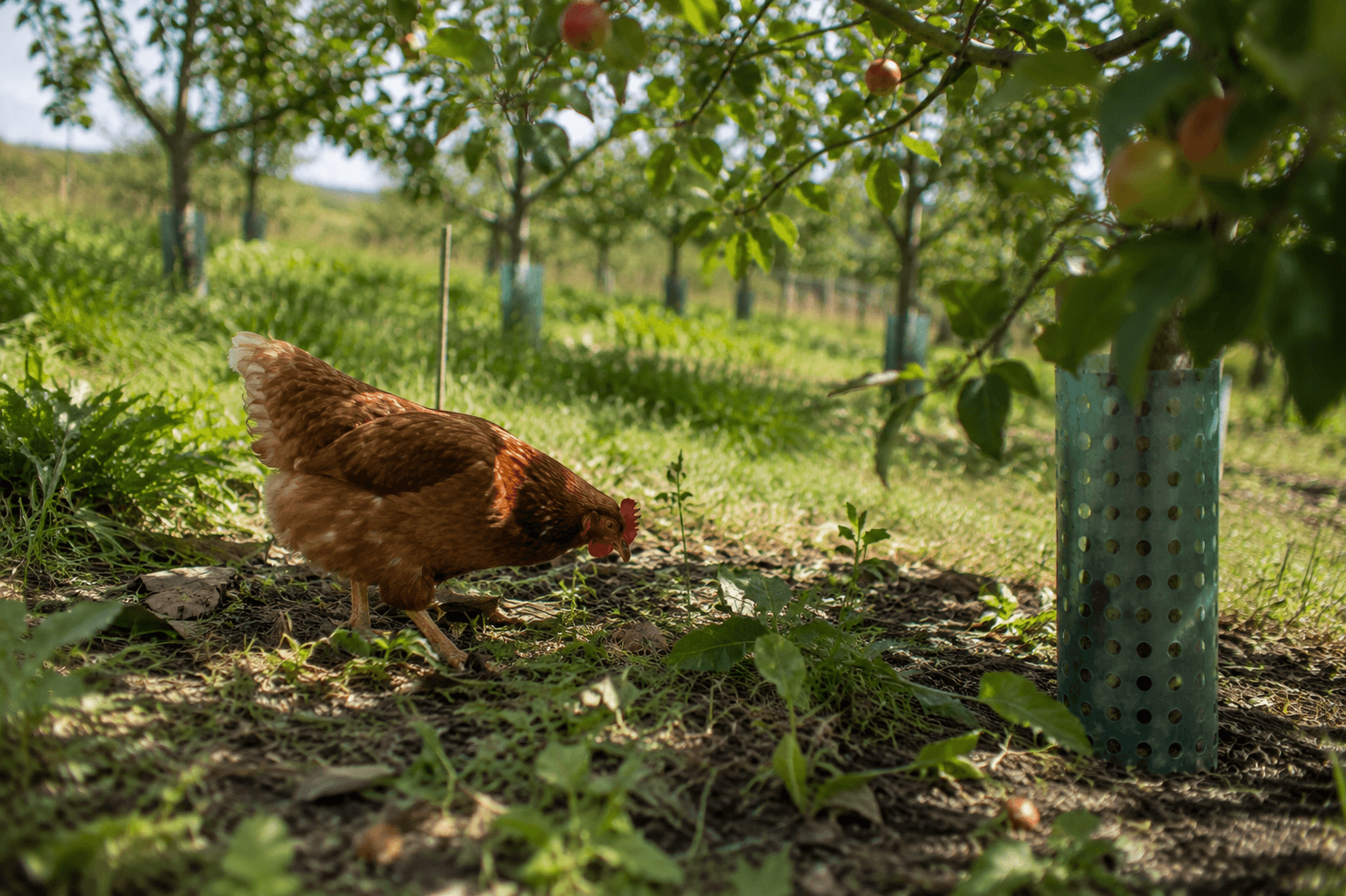
Animals in the orchard are a designed rotation, not an afterthought. The timing of chickens or pigs through your system closes nutrient loops and reduces pest pressure when planned. On a two-hectare lifestyle block near Motueka, a central row of heritage apple and pear on semi-dwarfing rootstock underplanted with comfrey, borage, and Siberian pea shrub shows how guild layers and animal access can share the same ground.
A row of fruit trees is not a food forest. The gap between them is patience plus layered design. Enrolled learners build species lists and guild choices suited to their own bioregion, turning the orchard section of the portfolio into a living system plan rather than a planting list.
This page is a self-contained module summary for visitors who are not yet enrolled. Subscribe for quizzes, forums, design tasks, theme guides, and portfolio coaching across the full course.