Module 3 · Patterns
Pattern Understanding
From ecosystems to farm design
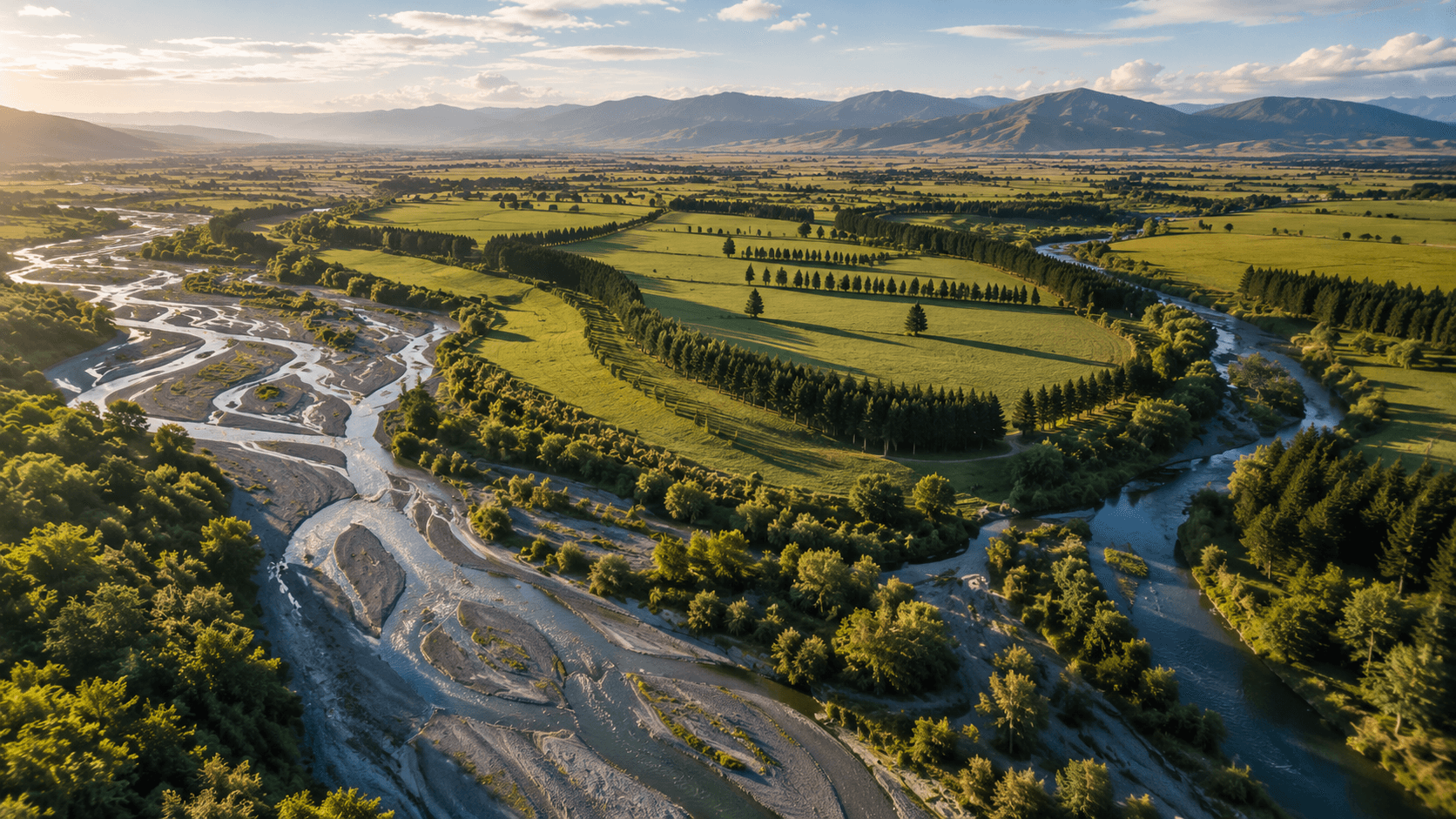
Nature repeats a small vocabulary of forms: branching, spirals, waves, edges, and gradients, from mycelium to catchments. Pattern literacy helps you read a site quickly and place access, water, shelter, and planting where the landscape already wants to work. Spirals, branches, waves, and fractals are not decoration. They are records of how energy moved through a system, and they give you a shared language for what you see in the field. The branching in a fern frond, a river's tributaries, and your own lungs is the same shape solving the same problem: how to move the most resource through the least material. Learn to see it once and you start finding it on your own contour lines.
Form patterns appear when two elements interact. Wind over water creates waves. Roots and canopies branch. Koru spirals repeat at many scales. Beyond visible shapes, ecosystems organise through stratification from canopy to soil, zonation from edge to core, and succession from pioneer species to mature communities. Permaculture design harmonises with these patterns rather than fighting them with straight rows on curved land.
Stratification in New Zealand bush, from canopy to ground fern, is a template for stacking productive species on your block. Riparian ribbons and terrace edges concentrate biodiversity and fertility. Find them on your site before you fence anything. Wind behaves like water: it flows, pools, and eddies around landforms, so map it as carefully as you map drainage.
On a Waikato hillside after rain, every rivulet carves the same branching form as the kahikatea roots holding the bank. The pattern is the instruction. Succession is already happening on every neglected corner of your property. Read it as free site analysis. A dated photo journal of recurring patterns is primary design evidence, not a side task for later.
Energy capture is the deeper logic. Diverse interconnected life forms exchange nutrients and moisture before they leave the system, which is why forests build soil while bare paddocks export it. Great New Zealand designs read local patterns such as stream meanders, nor'wester exposure, riparian ribbons, and terrace forms before drawing zones. Species choice then follows guild fit, pest resilience, climate, and the yields you actually need.
Pattern literacy is not a module you finish and move past. It is the habit every later map, swale, and planting plan depends on. Enrolled learners build a pattern journal from their own site that keeps paying off in the water, orchard, and whole-farm modules long after this page is behind them.
This page is a self-contained module summary for visitors who are not yet enrolled. Subscribe for quizzes, forums, design tasks, theme guides, and portfolio coaching across the full course.