Module 15 · Garden
Annual Garden
Kitchen garden systems and rotation
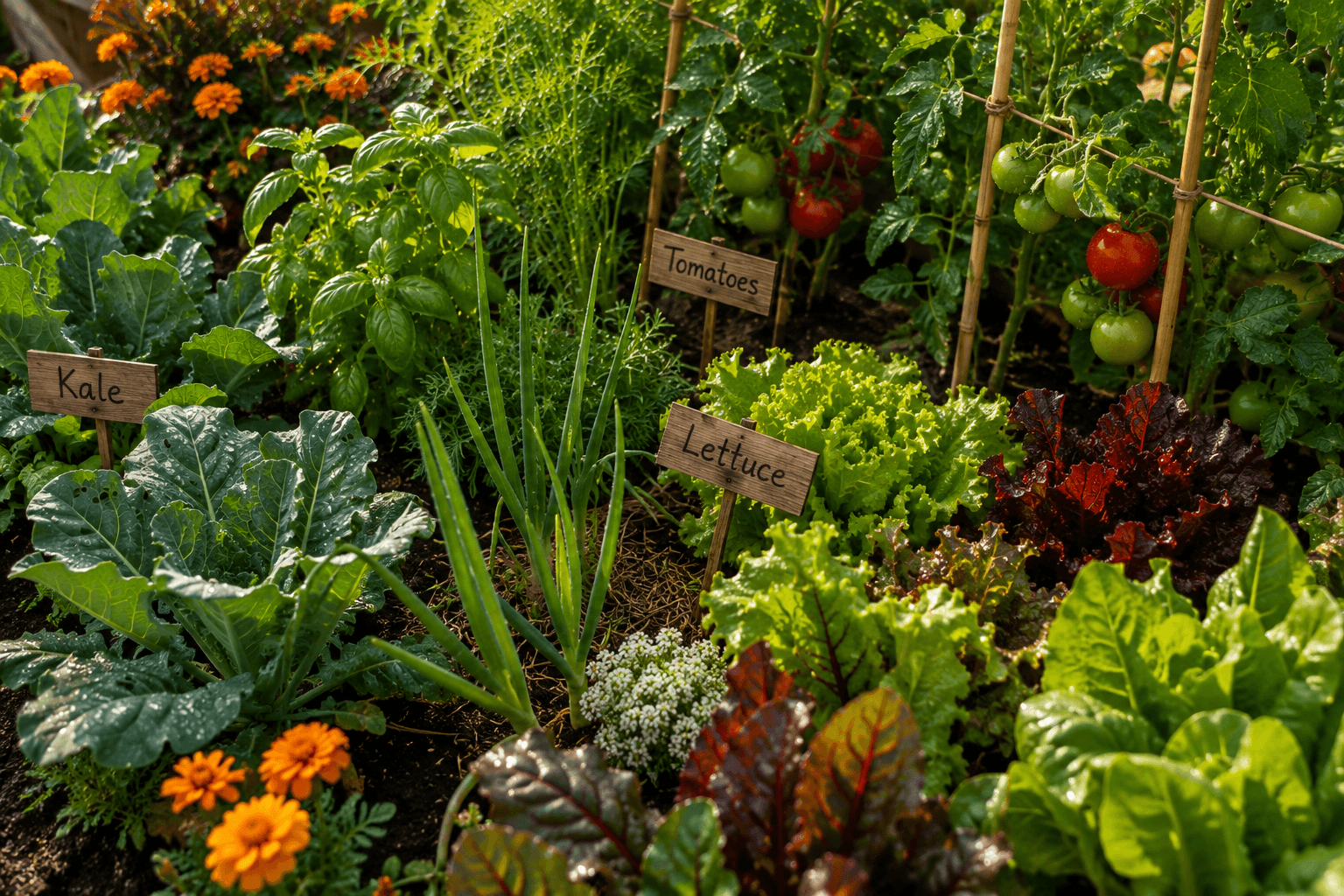
Zone 1 is the kitchen garden: the most visited, most intensive production space on your property. The design aim is a diversity of annual edibles providing fresh, nutrient-dense, organic produce for daily cooking, not a show garden that exhausts you in February. A well-designed Zone 1 garden is measured in footsteps from the kitchen door, not kilometres from the house, on a Horowhenua lifestyle block or a Tāmaki Makaurau back section alike. A garden's real yield is often decided less by the soil test than by footsteps: the bed a few extra steps from the kitchen door gets watered less, weeded less, and quietly abandoned, however well it was designed.
Site your annual beds within easy reach of the kitchen. Daily harvest should take minutes, not a trek across the property. Know your actual frost dates and prevailing wind exposure before committing to crops or sowing times. Southland and Northland calendars are not interchangeable. Layout matters for labour: beds close to water, paths wide enough for wheelbarrows, and succession planting so something is always ready.
Permaculture techniques suit Zone 1 well. Sheet mulching builds soil without tillage. Compost loops return kitchen and garden waste. Plant guilds combine companions and pest confusion. Covered growing with cloches, tunnel houses, or glasshouses matches your frost dates. Use succession planting to avoid gluts. Stagger sowings of lettuce, silverbeet, and beans every two to three weeks through the season.
Rotate crop families across beds each season. Brassicas, legumes, roots, and alliums on a four-year rotation break pest and disease cycles and balance nutrient demand. Integrate beneficial habitat at the bed edge. A strip of phacelia, alyssum, or dill supports hoverflies and predatory wasps. White butterfly, slugs, aphids, and root knot nematode are familiar challenges across Aotearoa. Integrated management works better than single-product reactions.
A lifestyle block grower near Motueka runs four 1.2-metre-wide raised beds on a four-year brassica-legume-root-allium rotation, applies frost cloth from late April over the brassicas, and keeps a simple garden journal noting what thrives and what fails in that microclimate. That site-specific record becomes the most valuable planning tool for the next season and for portfolio evidence.
Zone 1 is the part of the design you will actually eat from every week. Enrolled learners take layout, rotation, and yield estimates further and tie them into the water and soil sections, so the kitchen garden earns its place in the portfolio as well as on the dinner table.
This page is a self-contained module summary for visitors who are not yet enrolled. Subscribe for quizzes, forums, design tasks, theme guides, and portfolio coaching across the full course.