Module 7 · Soil
Soil Health
Biology, structure, and amendment strategy
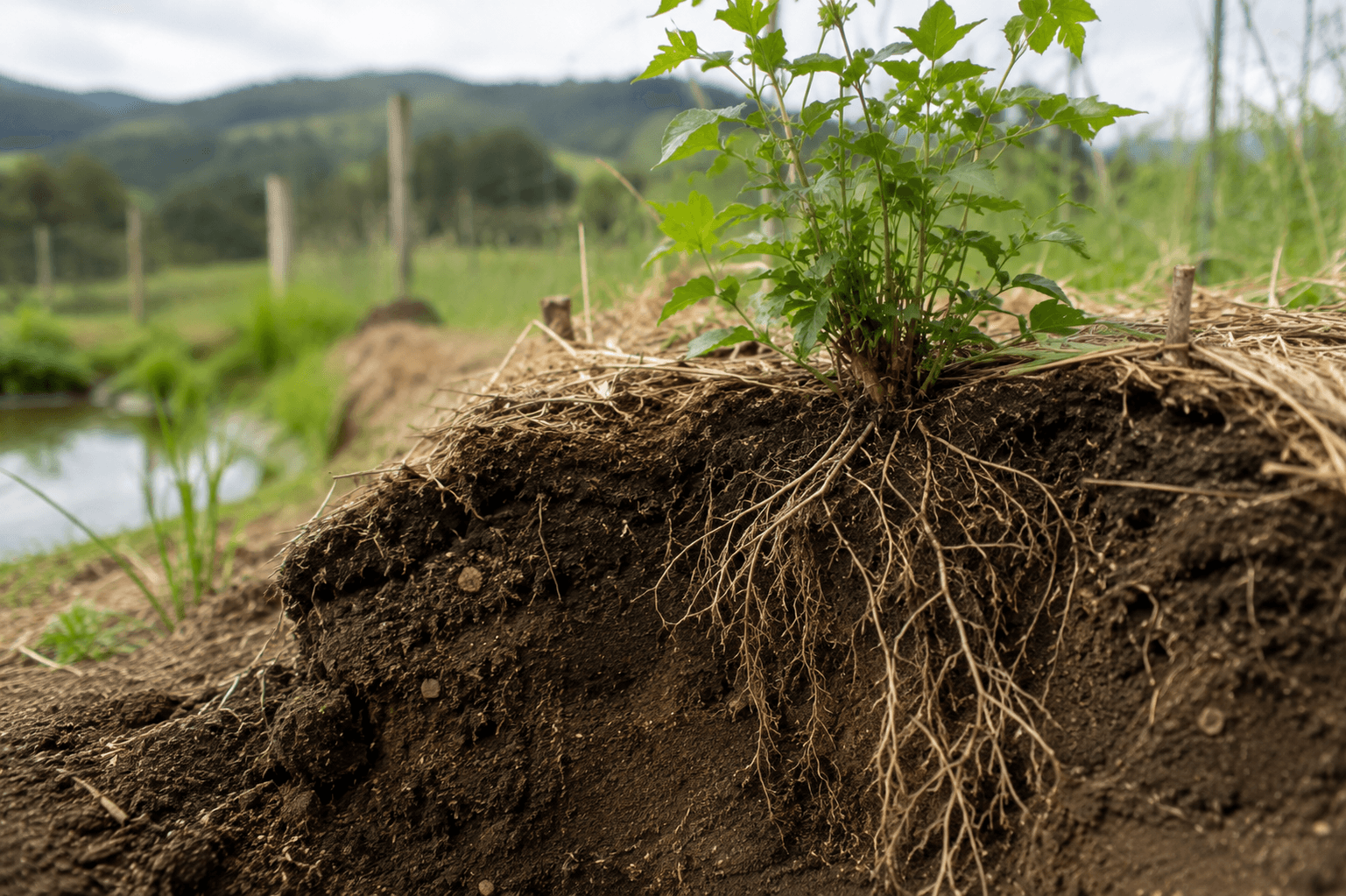
Soil is created by life acting on mineral sediments. Organic matter and biological glues form aggregates that hold air, water, and nutrients. Sheltered by plants and fed regular organic inputs, soil becomes infrastructure that pays dividends for decades. A single teaspoon of living soil holds more organisms than there are people on the planet, which is exactly why rebuilding that biology changes how land behaves faster than almost any other intervention available to a smallholder. Healthy agricultural loam balances minerals, water, air, and organic matter. High organic content improves structure, permeability, pH buffering, and drought resilience across New Zealand's highly variable soil orders.
Identify your soil texture first. Free-draining Northland pumice sands need organic matter to hold nutrients, while heavy clays need structure and drainage before they can host intensive production. Canterbury silts and volcanic ash soils each tell a different fertility story. Check your S-map soil order and drainage class before purchasing any inputs. Site-matched interventions consistently outperform catalogue recommendations written for another bioregion or another hemisphere.
Soil pH below 5.8 locks up phosphorus and molybdenum. A simple lime application matched to your buffer pH test is often the cheapest fertility win available. Mycorrhizal networks extend root reach many times over. Protect them by reducing tillage passes and avoiding broad-spectrum fungicides. A spade test and a jar sedimentation test cost nothing and reveal compaction depth and texture class before you spend on lab work.
Ground cover is your fastest tool for soil carbon. Bare soil under New Zealand rainfall loses structure, biology, and nutrients with every storm. Regenerative farms trade short-term yield spikes for soil that strengthens every season. Soil is ecological currency. Depletion bankrupts the catchment. Building soil carbon may be among the most practical climate responses available on working land.
On a Horowhenua market garden, shifting from annual cultivation to permanent beds with compost mulch rebuilt measurable earthworm populations and water-holding capacity within two growing seasons. Composting methods, farm-made biofertilisers, fungal inoculants, and rock dust offer paths beyond energy-intensive soluble fertilisers. Observation matters as much as testing: compaction, earthworm counts, smell, and water infiltration after rain tell you what labs confirm.
Every system you design later, garden, orchard, or pasture, is only as good as the ground it stands on. Enrolled learners run their own soil tests and amendment plans, then carry that evidence into the water and grazing modules, so nothing downstream is built on assumptions that do not match the site.
This page is a self-contained module summary for visitors who are not yet enrolled. Subscribe for quizzes, forums, design tasks, theme guides, and portfolio coaching across the full course.